

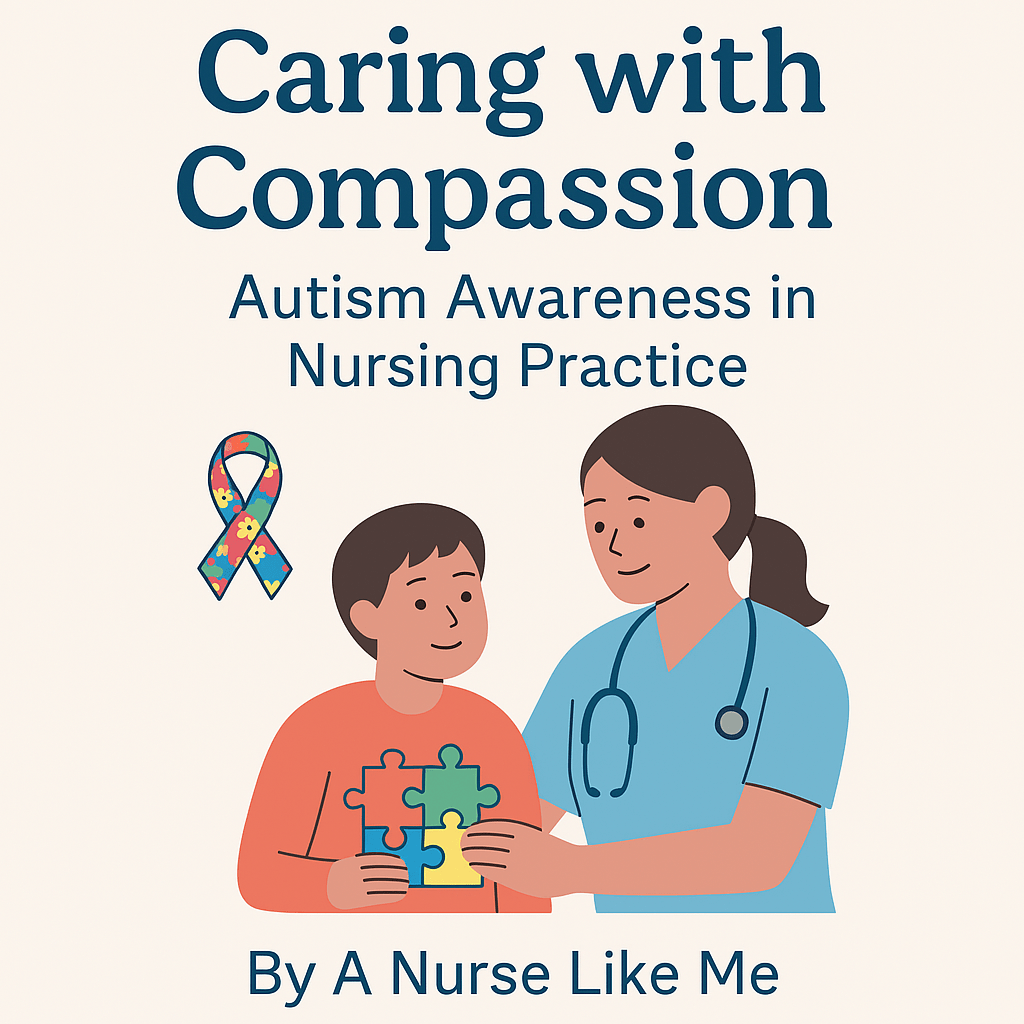
As nurses, we care for patients from all walks of life—and that includes individuals with autism. But autism isn’t always visible, and our approach to care makes a world of difference.
Creating a safe, respectful, and calm environment for patients with autism isn’t just a skill—it’s a responsibility.
Understanding Autism in Healthcare
Autism is a neurodevelopmental condition that affects communication, social interaction, and behaviour. Patients with autism experience:
- Sensory sensitivities (to lights, noise, touch, smells)
- Communication differences (verbal, non-verbal, or delayed speech)
- A need for routine and predictability
- Difficulty expressing pain or discomfort
Healthcare environments can be overwhelming, especially during procedures, transitions, or emergencies. Our role as nurses is to recognize these needs and respond with intention.
How Nurses Can Create a More Autism-Friendly Environment
1. Slow Down & Speak Clearly
Use simple, direct language and give one instruction at a time. Avoid idioms, sarcasm, or abstract phrases. If needed, allow time for the patient to process and respond.
Instead of: “Let’s hop onto the scale real quick!”
Try: “Please step on the scale now.”
2. Reduce Sensory Overload
Whenever possible, lower the lights, reduce background noise, and limit touch or unexpected physical contact.
If a patient wears headphones, brings a toy, or uses a fidget tool, let them. These help regulate their sensory experience.
3. Involve the Caregiver or Support Person
No one knows the patient better than their caregiver. Ask:
- “What helps calm them?”
- “Do they have any triggers we should avoid?”
- “How do they best communicate?”
Their insight is invaluable.
4. Use Visual Supports or Social Stories
If your unit or clinic has access to picture charts, visual schedules, or social stories, use them! These tools prepare patients for what’s coming and reduce anxiety.
5. Be Flexible & Patient-Centered
If a patient needs more time, prefers not to make eye contact, or avoids physical touch, don’t force it. Meet them where they are.
What matters most is providing care in a way that feels safe, not stressful.
Final Thought: Awareness is the First Step—Compassion is the Practice
A nurse like me sees every patient as an individual. We lead with kindness. We advocate for inclusive care. We create a healthcare system that welcomes everyone; loud hands, quiet voices, and all.
Let’s not just celebrate Autism Awareness Day; let’s make autism-aware care a daily practice.
Have you cared for a patient with autism? What’s one thing you learned from the experience? Share your story or tip below—we learn better when we learn together.
 A Nurse Like Me
Leave a comment